
Explore Academic Opportunities at Gurukul College Bathinda
Multidisciplinary Learning for Knowledge, Skills & Future Opportunities
Gurukul College Bathinda aims to provide a broad and flexible academic environment where students can explore higher education across multiple disciplines while developing academic knowledge, practical abilities and skills relevant to future study, employment and personal growth.
A Broad & Flexible Academic Environment
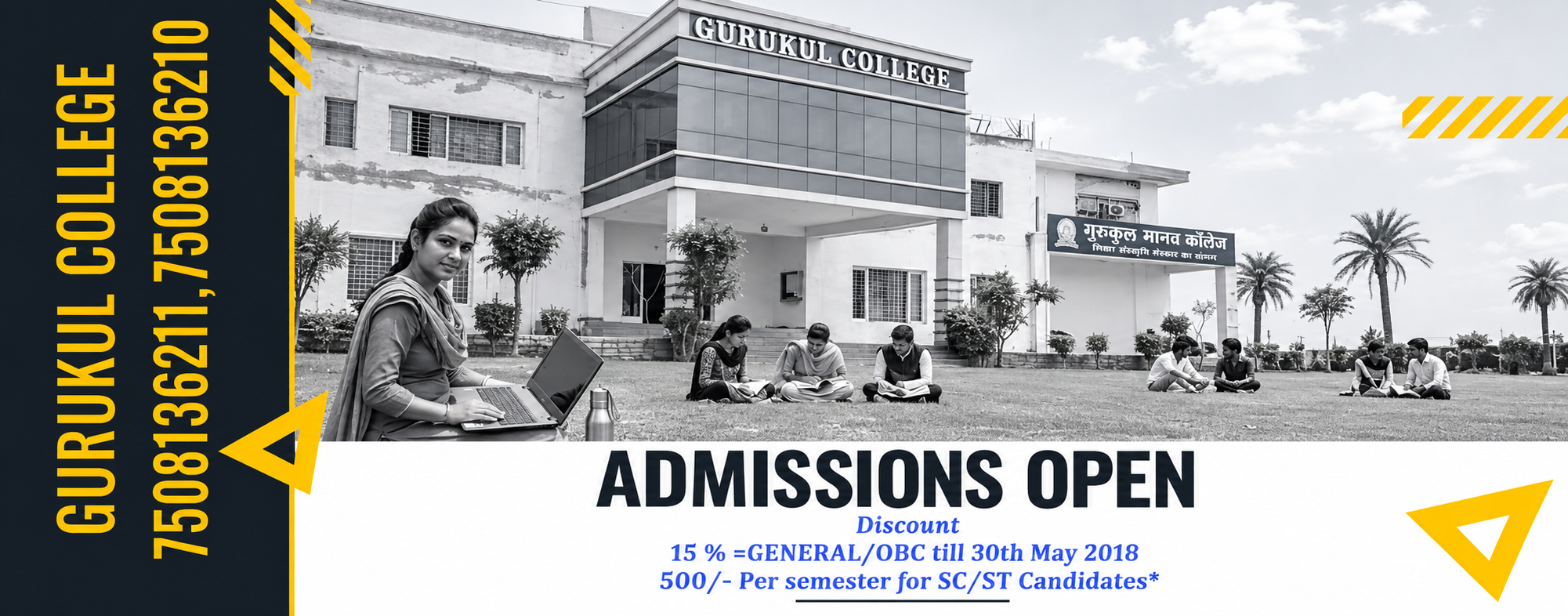
Gurukul College Bathinda, located at Ring Road, Phase-2, on the stretch from Malout Road to Badal Road, Bathinda, Punjab – 151005, aims to provide students with opportunities to pursue higher education across multiple areas of learning.
The College is designed as a multidisciplinary institution, allowing learners to explore subjects from the humanities, social sciences, commerce, management, computer applications, technology, skill development and other emerging fields.
Academic choices should help students connect knowledge with practical skills, communication, technology, creativity, career preparation and responsible participation in society.
Multidisciplinary Learning
A multidisciplinary academic environment encourages students to understand knowledge from different perspectives and develop a wider combination of academic, professional, digital and transferable skills.
Building Knowledge, Skills & Confidence
The purpose of the course structure is to support balanced academic, professional and personal development.
Academic Foundations
Build a strong understanding of concepts, subjects and disciplinary knowledge.
Practical & Professional Skills
Connect classroom learning with useful practical and professional abilities.
Communication Abilities
Strengthen written, oral, interpersonal and presentation skills.
Digital Competence
Develop confidence in using contemporary digital tools and technologies.
Analytical & Problem-Solving Skills
Encourage critical thinking, analysis and practical approaches to problems.
Research Orientation
Encourage enquiry, evidence-based thinking and academic exploration.
Creativity & Innovation
Support original thinking, new ideas and creative approaches to learning.
Career Readiness
Develop transferable skills that can support future education and employment pathways.
Ethical & Social Responsibility
Encourage responsible conduct, awareness and positive contribution to society.
Academic Areas
Depending upon approved offerings for the relevant academic session, programmes, subjects or courses may be available across the following academic areas.
Arts & Humanities
Students interested in society, culture, history, language, literature and human thought may explore programmes or subjects in areas such as:
Social Sciences
Students may explore subjects that help develop an understanding of society, institutions, behaviour, public life and development.
Commerce & Management
For students interested in business and professional pathways, learning opportunities may include areas such as:
Computer & Digital Studies
In response to the growing importance of technology, programmes or courses may include digital and computing-related areas such as:
Skill & Vocational Education
Career-oriented programmes may focus on practical, professional and employability-related learning. Depending upon approved offerings, areas may include communication, technology, enterprise, services and community-based vocational skills.
Programme Levels
Subject to official approval and availability, academic offerings may be organised under different programme levels to meet varied educational and skill-development needs.
Undergraduate Programmes
Degree-level programmes for eligible students who have completed senior secondary education.
Postgraduate Programmes
Advanced academic programmes for eligible graduates, where officially offered.
Diploma Programmes
Focused programmes designed to provide academic and practical training in a specialised field.
Certificate Courses
Shorter-duration learning opportunities designed for skill enhancement and supplementary learning.
Multidisciplinary Courses
Programmes or course combinations drawing upon knowledge and perspectives from more than one academic discipline.
Skill & Vocational Courses
Practical and employability-focused learning aligned with contemporary professional and skill-development needs.
Student-Centred Course Selection
Choosing an academic programme is an important educational decision. Students are encouraged to consider their interests, previous educational background, future plans and personal strengths before selecting a programme.
Where appropriate, students should also consult the latest eligibility requirements, admission information and authorised College guidance before submitting an application.
Choosing the Right Academic Pathway
A thoughtful course-selection process can help students align education with their interests, abilities and future plans.
Explore
Learn about available academic areas, programme levels and fields of study.
Evaluate
Consider your interests, educational background, strengths and career aspirations.
Verify
Check current programme availability, eligibility, admission requirements and official College information.
Choose
Select an appropriate academic pathway and proceed with the authorised admission process.
A Balanced Approach to Higher Education
The academic environment aims to connect disciplinary knowledge with practical abilities, technology, creativity, professional preparation and responsible citizenship.
Explore Your Interests. Develop Your Skills. Build Your Academic Future.
A multidisciplinary approach to learning that brings together knowledge, skills, technology, creativity and preparation for future educational and professional opportunities.